

By Tyson Sanchez, PT, DPT, COMT | Mobile PT Clinic
Aging is inevitable. Losing your strength, mobility, and physical independence doesn't have to be.
After more than two decades of working as a physical therapist, and enough birthdays of my own to appreciate the aging process firsthand, I've developed a strong appreciation for what it takes to maintain physical capability throughout life.
My interest in rehabilitation is also personal. Competitive sports brought me more than my share of significant injuries early in life, and those experiences helped shape my understanding of recovery and physical resilience. In many ways, this profession found me.
Today, as a physical therapist serving San Francisco, Oakland, and Berkeley, I draw on those experiences, my clinical training, and my own commitment to staying active to help people maintain their strength, mobility, and independence throughout their lives.
One of the most encouraging things I've observed throughout my career is how adaptable the human body remains, even as we get older.
While some physical changes are inevitable, many of the limitations commonly attributed to aging are influenced by inactivity, declining strength, and reduced exposure to challenging movement.
Whether you're 40, 60, or 80, there are meaningful steps you can take to maintain and improve your physical capabilities.
Here are seven that I consider particularly important for staying strong, mobile, and independent as you age.
1. Stay Consistent, but Let Your Routine Evolve
Perhaps the most important principle is consistency.
There is no single exercise routine that's ideal for everyone, and the program that works for you today may need to evolve over time.
While I maintain certain foundations throughout the year, particularly strength training and cardiovascular conditioning, I frequently change the emphasis of my exercise routine with the seasons.
This fall, I'm focusing more on indoor climbing. During the winter, I plan to shift more attention toward running.
At other times of the year, I may spend more time practicing yoga or exploring different forms of strength and movement training.
These changes help keep exercise interesting while introducing new physical challenges.
They also remind me that maintaining fitness doesn't require following a rigid program indefinitely.
Some individuals may benefit from beginning with two short strength-training sessions and regular walking. Others may already be active and need help addressing mobility limitations, recurring injuries, or deficits in strength and coordination.
My advice: Find an approach that's sustainable, appropriately challenging, and adaptable.
Don't underestimate the value of modest, consistent exercise. And don't assume that an activity must be abandoned simply because it has become more difficult.
Sometimes modifying the intensity, technique, or frequency is all that's necessary to continue participating.
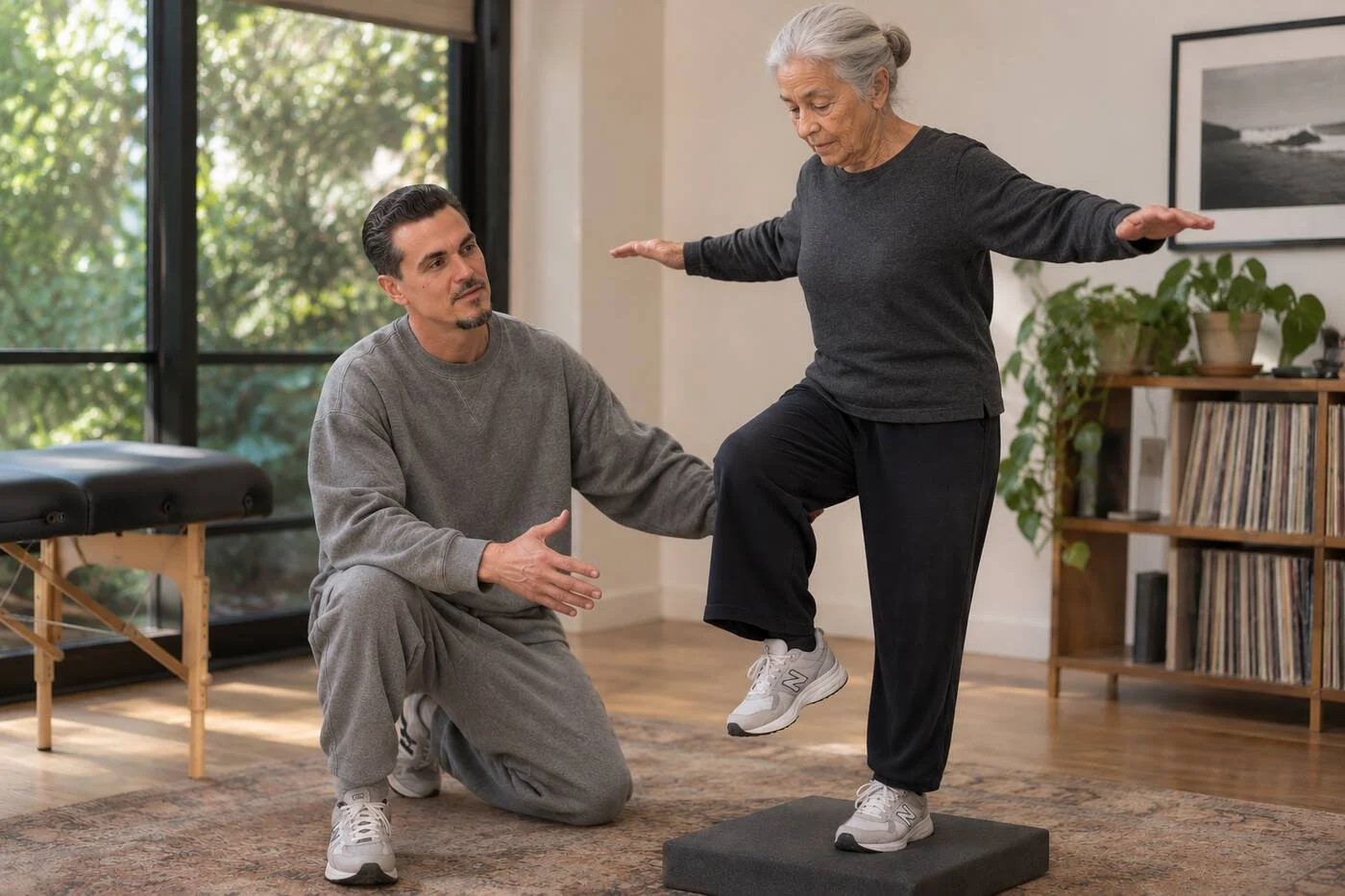
2. Challenge Your Balance and Coordination
Balance is often overlooked until it begins to decline.
But balance is more than the ability to stand on one foot. It involves your nervous system continually coordinating information from your eyes, inner ears, muscles, and joints.
In my practice, I frequently see how limitations in strength, mobility, and coordination can affect a person's confidence and movement.
Rather than treating balance as an entirely separate skill, I often incorporate it into functional exercises.
Carrying weights, performing single-leg movements, and transitioning between different positions can challenge several systems simultaneously.
My advice: Include activities that require you to control your body in different positions.
Start with something manageable, such as standing on one leg near a stable surface, and gradually progress as your confidence improves.
The objective is to maintain the ability to respond effectively to the changing physical demands of everyday life and reduce the risk of falls.
3. Keep Your Joints Moving
Mobility is often confused with flexibility, but they're not quite the same thing.
Flexibility generally refers to the ability of muscles and other tissues to lengthen. Functional mobility also involves the strength and control necessary to move through useful ranges of motion.
One of the things I've observed clinically is that people often become less comfortable performing movements they haven't practiced in years.
Deep squatting, rotating through the upper back, reaching overhead, and getting down to the floor are good examples.
I've incorporated yoga into my weekly routine for years, but I also enjoy exploring other activities that challenge my movement in different ways.
This fall, for example, I'm replacing my regular yoga session with indoor rock climbing.
Climbing introduces different demands on grip strength, mobility, coordination, balance, and whole-body control. It also provides an opportunity to challenge myself with a new skill.
The specific activity is less important than continuing to expose your body to a variety of movements.
My advice: Continue using the ranges of motion you want to preserve.
You don't necessarily need an elaborate stretching routine. Regularly moving your joints through comfortable, functional ranges, while developing strength within those ranges, can be an effective approach.
4. Make Strength Training a Priority
If I could recommend one form of exercise to help people preserve their physical capabilities as they age, resistance training would be near the top of the list.
Muscle mass and strength tend to decline with age, particularly when we become less active. Fortunately, muscles retain the ability to adapt to exercise throughout our lives.
I personally incorporate resistance training three days per week, emphasizing functional movements such as squatting, lifting, pushing, pulling, and carrying.
I enjoy working with kettlebells, dumbbells, and my own body weight. These allow me to challenge multiple muscle groups while also incorporating balance, coordination, and movement control.
My advice: Aim to perform strength training at least twice per week. Focus on developing strength through movements that translate into everyday activities.
You don't need to lift exceptionally heavy weights, but the resistance should be challenging enough to encourage your muscles to adapt.
5. Maintain Your Cardiovascular Fitness and Pay Attention to VO₂ Max
Being strong is important, but so is having the endurance to sustain physical activity.
Good cardiovascular fitness makes it easier to walk longer distances, climb hills, travel, participate in recreational sports, and manage the physical demands of daily life.
One measure of cardiovascular fitness that has received considerable attention in recent research is VO₂ max, which describes the maximum rate at which your body can utilize oxygen during increasingly demanding exercise.
Why does it matter?
A major 2024 review published in the British Journal of Sports Medicine, drawing on research involving millions of participants, found that higher cardiorespiratory fitness was consistently associated with a lower risk of premature death and several chronic health conditions.
These findings don't prove that improving VO₂ max will automatically extend someone's life, but they reinforce the importance of cardiovascular fitness as a meaningful marker of health.
In my own training, I incorporate both moderate-intensity aerobic exercise and more demanding interval sessions.
Some workouts emphasize sustained, conversational-pace exercise, often referred to as Zone 2 training. I also dedicate time each week to higher-intensity intervals intended to challenge and improve my VO₂ max.
These different approaches serve complementary purposes.
Recent research, including a 2026 systematic review examining interval training in older adults, suggests that appropriately prescribed high-intensity interval training can improve cardiovascular fitness. However, the evidence doesn't establish that it's superior to moderate-intensity exercise for everyone.
My advice: Start by establishing a consistent cardiovascular routine through activities such as brisk walking, cycling, swimming, or jogging.
For individuals with an established fitness foundation, appropriately progressing toward more demanding exercise may offer additional benefits.
However, high-intensity intervals aren't necessary for everyone and shouldn't be the starting point for someone who is relatively inactive or has medical conditions that warrant additional precautions. These individuals may benefit from professional guidance before beginning vigorous exercise.
The most important goal is to develop cardiovascular fitness at a level that's appropriate for you.
6. Don't Forget About Power
One component of fitness that receives relatively little attention is power.
Power is the ability to produce force quickly, and it plays an important role in everyday movement.
Think about rising quickly from a chair, climbing stairs, or reacting when you unexpectedly stumble.
Research has demonstrated that the ability to generate muscular power often declines with age, sometimes more rapidly than strength alone.
That's one reason I incorporate exercises emphasizing speed and controlled force production into my own training.
Depending on the individual, this might involve dynamic kettlebell movements, faster sit-to-stand exercises, or other activities that safely challenge the ability to generate force.
My advice: Once you've established a reasonable foundation of strength and movement control, consider incorporating exercises that challenge how quickly you can move.
These exercises should be selected according to your experience, physical capabilities, and medical history.
7. Take Recovery Seriously
Exercise challenges the body. Recovery is when many of the adaptations to that exercise occur.
As I've gotten older, I've become increasingly conscious of balancing physical activity with adequate recovery.
My weekly training includes different types of exercise rather than demanding the same thing from my body every day.
For example, I might perform a more challenging strength workout one day and emphasize cardiovascular conditioning or mobility the next.
I also value having a day without structured training.
This doesn't mean that aging requires us to become less active. It means recognizing that training, sleep, nutrition, and recovery all contribute to long-term performance.
My advice: Pay attention to how you respond to exercise.
Some muscle soreness and fatigue can be normal, particularly following unfamiliar or challenging activity. Persistent pain, worsening symptoms, or declining performance may indicate that your training needs adjustment.
An effective program should challenge you without continually exceeding your capacity to recover.
The Bigger Picture: Maintain the Ability to Do What Matters to You
When I think about healthy aging, I'm less interested in maintaining a particular appearance or achieving an arbitrary fitness number than I am in preserving physical capability.
I want to continue lifting, moving, traveling, and participating in the activities I enjoy as I get older.
And that's essentially what I want for my patients.
For one person, that might mean returning to tennis following an injury. For another, it might mean walking several miles comfortably, getting up from the floor without assistance, or remaining physically independent well into their 80s.
The specific goals may differ, but the principles are remarkably consistent.
Strength, cardiovascular fitness, balance, mobility, and power are all qualities we can continue to develop throughout life.
You don't have to address everything at once, and you certainly don't need to exercise like a professional athlete.
Start with what you're capable of today, challenge yourself appropriately, and continue building from there.
The objective isn't to move exactly as you did 20 years ago. It's to maintain and improve your ability to move well today and in the years ahead.
About the Author
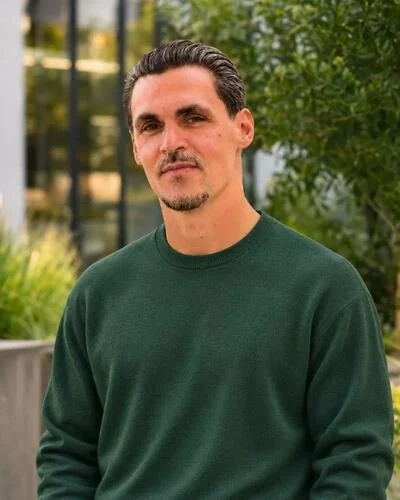
Tyson Sanchez, PT, DPT, COMT
I'm a Doctor of Physical Therapy with advanced training in orthopedic manual therapy, movement assessment, and rehabilitation.
Through Mobile PT Clinic, I provide individualized, one-on-one physical therapy, personal training, or a hybrid of the two in San Francisco, Oakland, and Berkeley.
My approach emphasizes understanding how people move, identifying factors that contribute to pain or physical limitations, and developing practical strategies to improve long-term function.
Whether you're recovering from an injury, managing recurring discomfort, or hoping to maintain your physical capabilities as you age, I work with patients to develop individualized plans based on their needs and goals.
Contact Mobile PT Clinic to schedule an evaluation or learn more about my services.
Research and Further Reading
Cardiorespiratory Fitness and Health Outcomes, British Journal of Sports Medicine (2024)
Effects of High-Intensity Interval Training in Older Adults: A Systematic Review (2026)